Joint Replacement Surgery
When arthritis pain stops you sleeping, stops you climbing stairs, or stops you walking to the shop, joint replacement is the operation that gives those things back.
Dr. Arvind Shiroya has performed joint replacement surgery in Surat since 1996, and holds a Joint Replacement Fellowship from Laud Clinic, Mumbai. Surgery is done here, in our own theatre, and he sees every patient himself each day they are admitted.
- About 60 minutes
- Theatre time for a total knee replacement. Less tissue handling generally means a more comfortable recovery.
- Walking on day 1
- Most patients are helped onto their feet the day after surgery, supervised by our physiotherapists.
Knee replacement
What it is
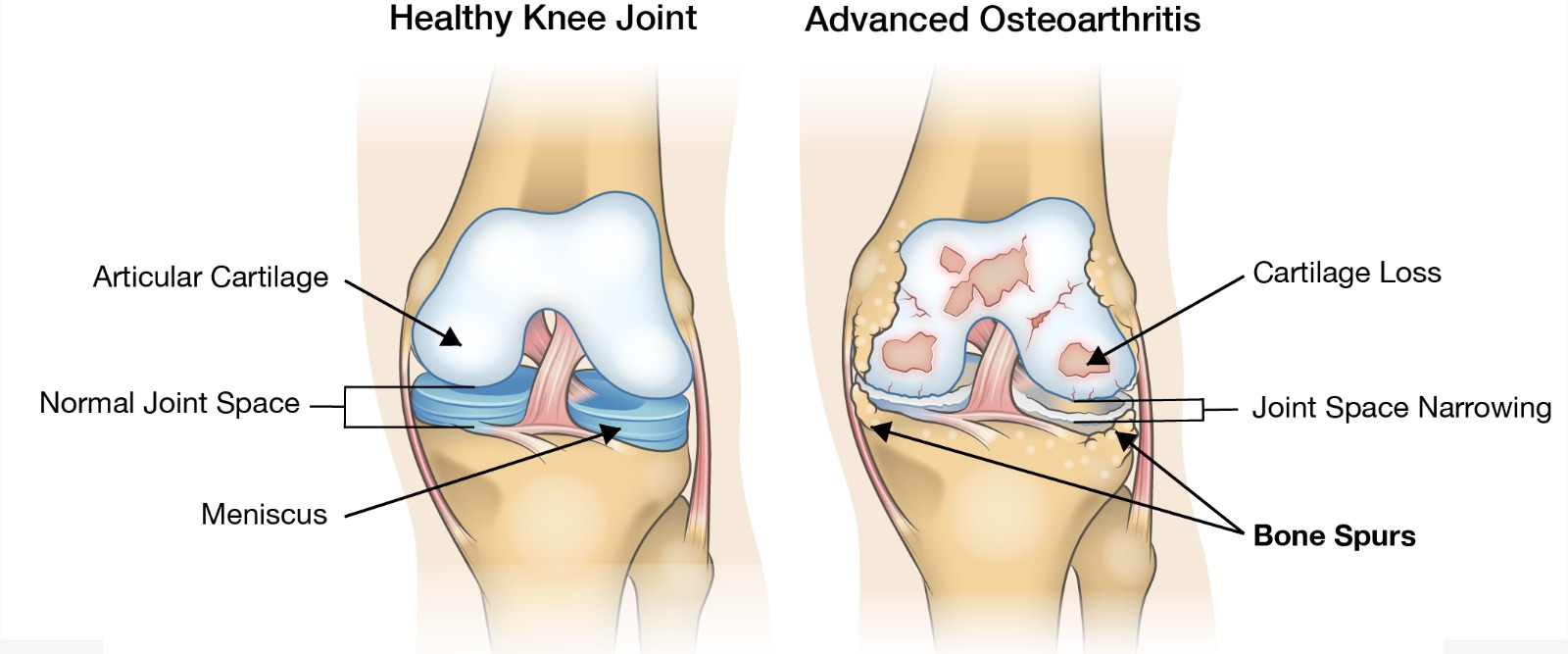
Knee replacement relieves the pain and stiffness of a damaged knee joint. The worn surfaces are removed and replaced with metal and plastic components shaped to let the knee bend and straighten normally.
The most common reason is osteoarthritis. It is also performed for rheumatoid arthritis, for knees damaged by an old injury, and for severe cartilage or ligament damage.
When it is worth considering
Joint replacement is not the first step. It becomes the right option when:
- Pain limits walking, climbing stairs, or getting in and out of a chair – or is there even at rest.
- The knee is chronically stiff or swollen and will not bend or straighten properly.
- Rest, weight loss, physiotherapy, a walking stick, medication and braces have been tried and have stopped helping.
- The knee has become visibly bowed or deformed.
If you are not yet at that point, we will tell you so. Not every painful knee needs replacing.
Total and partial replacement
Total Knee Replacement (TKR) resurfaces the whole joint – the lower end of the thigh bone, the upper end of the shin bone, and usually the back of the kneecap.
Partial Knee Replacement (PKR), also called unicompartmental replacement, resurfaces only the damaged part, leaving healthy bone and ligaments untouched. It is an option when arthritis is confined to one compartment. Where arthritis is widespread, a total replacement is the right operation.
How the surgery is done here
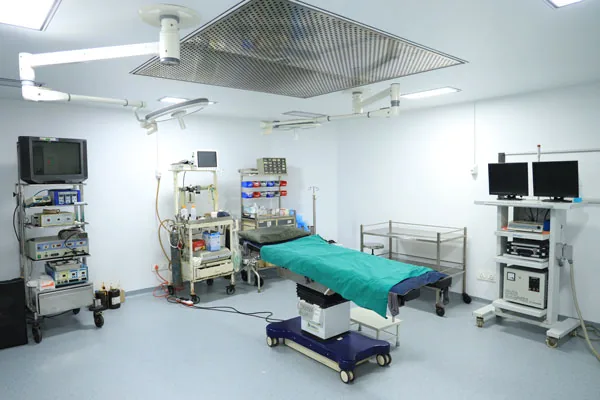
A total knee replacement takes approximately 60 minutes in theatre. Surgery is performed in Class 100 operating theatres maintained to strict infection-control standards, with negative air pressure and surgical space suits worn by the operating team.
We follow a structured pain-management protocol so patients are as comfortable as possible afterwards. That is what allows us to get people moving quickly rather than waiting for pain to settle.
Recovery
Day 1 – most patients are helped onto their feet and encouraged to walk, supervised by our physiotherapy team.
Day 4 – stair-climbing training begins, both to restore movement and to rebuild confidence.
Rehabilitation is guided by trained physiotherapists throughout. There is no artificial exercise routine – the programme is built around normal movement.
Revision surgery
A knee implant is a mechanical device and can, over time, fail. Revision surgery removes the old implant and replaces it, sometimes with a bone graft to rebuild lost bone. Implants may need revision because of infection, loosening, wear of the plastic bearing, malalignment, or instability of the joint.
Hip replacement
What it is
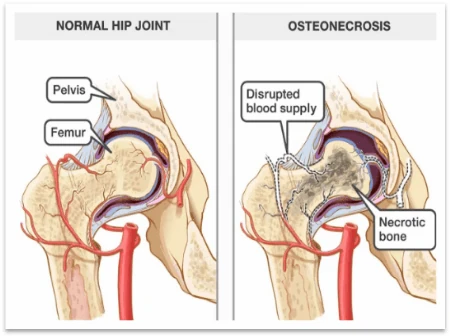
The hip is a ball-and-socket joint: the ball at the top of the thigh bone sits in a socket in the pelvis. In hip replacement the damaged parts are replaced with an artificial joint, restoring the movement needed for everyday life.
The most common reason is osteoarthritis of the hip. It is also performed after hip fractures, for rheumatoid arthritis, and for conditions such as avascular necrosis, where the bone loses its blood supply.
Symptoms that suggest it is time
- Hip pain that keeps you awake at night.
- Little or no relief from pain medication.
- Difficulty going up or down stairs.
- Trouble standing up from a seated position.
- Giving up walking or other activities because of pain.
Hip replacement was once considered mainly for patients over 60. Modern implants are stronger and longer lasting, so younger and more active patients are candidates too – with the understanding that an active patient may need the joint revised after 15 to 20 years.
What the implant is made of
A total hip prosthesis has three parts:
- A cup replacing the hip socket, usually plastic, though ceramic and metal are also used.
- A ball, metal or ceramic, replacing the head of the thigh bone.
- A stem fixed into the shaft of the thigh bone to support the ball.
Where only the head of the femur is replaced – often after a fracture – the operation is called a hemiarthroplasty.
Preparing for surgery
Before the operation you will be seen in person for a full assessment. We review your medical history to confirm you are fit for surgery, examine the hip for range of movement and muscle strength, and arrange blood tests and imaging as needed.
This appointment is also the right time to ask questions. Please bring them. Patients who understand what is going to happen recover more confidently.
After surgery
Most patients regain the movements needed for everyday tasks – walking, climbing stairs, sitting and standing, dressing. Our physiotherapy team works with you from the early days after surgery, and we will give you a clear, realistic picture of your own expected recovery before you consent to the operation.
Hip resurfacing
Hip resurfacing reshapes and caps the damaged femoral head with a metal prosthesis rather than removing it. Because it preserves more bone, it can make a future hip replacement easier, which is why it is sometimes considered for younger patients.
It is technically more demanding, needs a larger incision, and carries a slightly higher complication rate than a conventional replacement. It is not suitable for patients with osteoporosis, impaired kidney function, known metal sensitivity, diabetes, or large areas of dead bone. Whether it is right for you is a decision to make together, in clinic.
Frequently asked
How long does knee replacement surgery take?
Approximately 60 minutes in theatre for a total knee replacement.
When will I walk again?
Most patients are helped to their feet and walking with support the day after surgery, under physiotherapy supervision.
How long does a joint replacement last?
Modern implants commonly last around 15 to 20 years. Younger, more active patients are more likely to need revision surgery in their lifetime.
Am I too old for a knee replacement?
Age alone is rarely the deciding factor – general health matters more. Many patients in their seventies and eighties do very well. Come and be assessed.
Will I need both knees done?
Not necessarily. Many patients need only one. Where both are affected, they can sometimes be done together and sometimes are better staged. We will advise based on your knees and your general health.
Is cashless insurance available?
Yes, with the insurers we are empanelled with. Bring your policy details to your first appointment so our staff can begin the approval early.
Can it be done under Ayushman Bharat or MA Yojana?
Yes. The hospital is empanelled under Ayushman Bharat (PM-JAY) and MA Yojana – Mukhyamantri Amrutam. If you are eligible under either, knee and hip replacement is covered in full and there is nothing to pay for the operation. Bring your scheme card to the first appointment.
Come and be assessed
Bring any X-rays or scans you already have, and your insurance policy details if you have cover.