
Advanced Trauma & Fracture Treatment
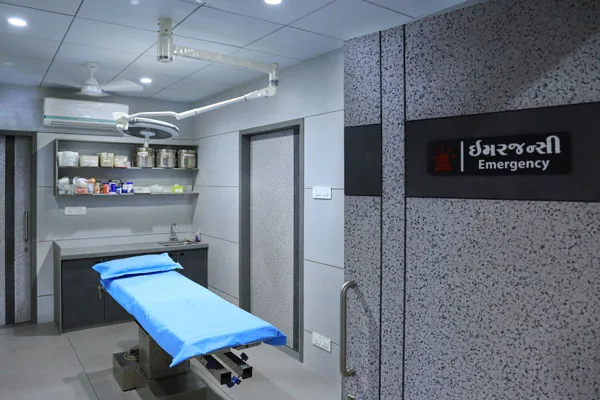
A fracture does not wait for clinic hours. Shiroya Orthopedic Hospital on Varachha Main Road runs a round-the-clock orthopedic emergency service, so a patient injured in a road accident, a fall at home or an accident at work can be assessed and treated immediately.
What we treat
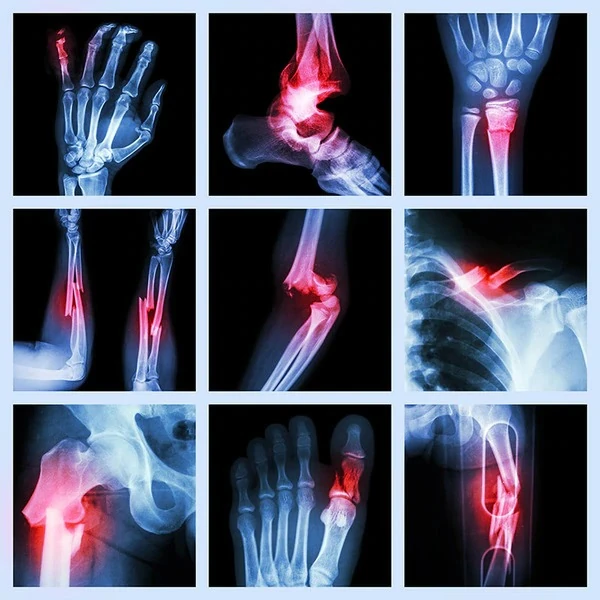
Our team routinely manages fractures of the shoulder, arm, wrist, hand, hip, thigh, knee, leg, ankle and foot – including injuries that need internal fixation with plates, screws, rods or external fixators.
Every patient is assessed with X-ray imaging on arrival. Where the injury is complex, we plan the reconstruction before surgery rather than during it.
Our centre is equipped to give victims of vehicle accidents, falls and other traumatic injuries the best possible chance for recovery.
Fracture types we treat
Choose a fracture below to learn how it may be assessed and treated.
Upper limb
Clavicle (collarbone) fracture
The clavicle is one of the most commonly broken bones, usually from a fall onto the shoulder or an outstretched hand. Many clavicle fractures heal well in a sling, but a fracture that is badly displaced, shortened or has broken through the skin generally does better with surgical fixation using a plate and screws.
Recovery: most patients begin gentle shoulder movement within a few weeks, with a return to heavier activity once healing is confirmed on X-ray.
Humerus (upper arm) fracture
The humerus runs from the shoulder to the elbow. Fractures near the shoulder are common in older patients after a fall; fractures of the shaft are more often seen after road accidents. Treatment depends on the location and on whether the nerve that runs alongside the bone has been affected – which is why these injuries need careful assessment rather than a cast alone.
Radius and ulna (forearm) fracture
The two forearm bones usually break together. Because the forearm has to rotate for everyday tasks – turning a key, a door handle, a tap – alignment matters more here than in many other fractures. Adult forearm fractures commonly need plate fixation to restore that rotation accurately.
Wrist fracture
Wrist fractures are among the most frequent injuries we see, typically from breaking a fall with an outstretched hand. They are also common in patients with osteoporosis. Treatment ranges from a cast for a stable, well-aligned fracture to plate fixation where the joint surface is involved.
Finger and hand fracture
Small bones, but the function they carry is disproportionate. A finger fracture that heals slightly rotated can leave the finger crossing over its neighbour when making a fist. Early, accurate treatment and hand therapy matter a great deal here.
Hip and thigh
Neck of femur fracture
A fracture at the top of the thigh bone, most often in older patients after a fall. These are urgent. The blood supply to the femoral head can be disrupted, so depending on the patient’s age and the fracture pattern, treatment may be internal fixation or a hip replacement.
Why speed matters: early surgery and early mobilisation significantly reduce the complications associated with prolonged bed rest in elderly patients.
Intertrochanteric fracture
A fracture just below the neck of the femur. The blood supply here is better than in a neck of femur fracture, so these are usually treated with internal fixation – commonly a dynamic hip screw or an intramedullary nail – allowing the patient to begin moving early.
Shaft of femur fracture
The femur is the strongest bone in the body, so a shaft fracture usually means a high-energy injury such as a road accident. Treatment is typically an intramedullary nail passed down the centre of the bone, which provides strong fixation and allows early weight bearing.
Supracondylar femur fracture
A fracture at the lower end of the thigh bone, just above the knee. Because the fracture line runs close to the knee joint, restoring the joint surface accurately is essential to reduce the risk of later arthritis.
Educational animation
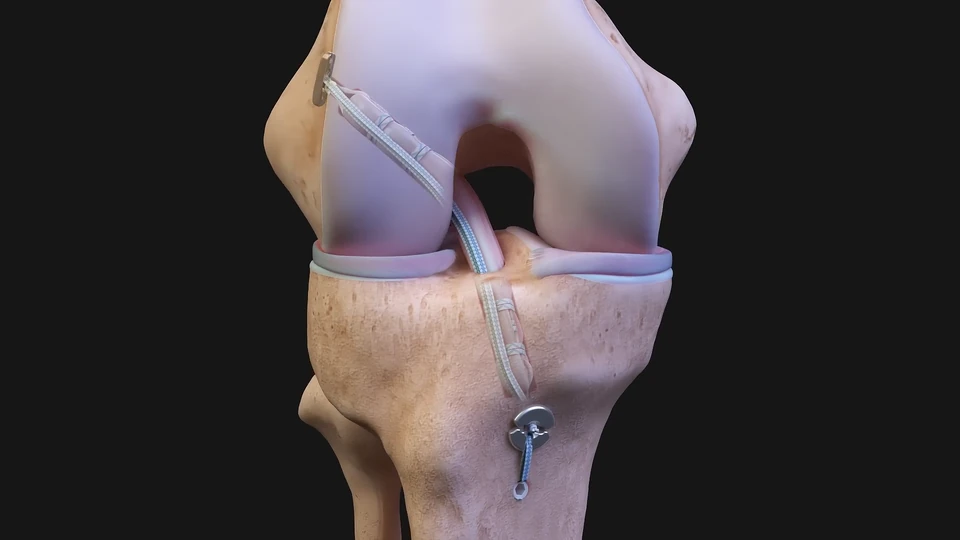
How a rod supports a fractured thigh bone
Watch this 28-second animation to see a broken thigh bone realigned, a rod placed inside it, and screws used to hold the rod in position.
- 28 seconds
- No sound
Patient education
Thigh bone fracture fixation
28-second animation
Want to know more about fracture treatment?
Read how a broken thigh bone is treated here, or come and be assessed. Emergency care runs 24 hours.
This animation explains a treatment. Your doctor will advise what is suitable for you.
Knee and lower leg
Patella (kneecap) fracture
Usually caused by a direct blow to the front of the knee. If the patient cannot straighten the knee against gravity, the extensor mechanism is disrupted and surgical fixation is generally needed to restore the ability to walk normally.
Tibial condyle (plateau) fracture
A fracture of the upper surface of the shin bone, where it forms the lower half of the knee joint. These involve the weight-bearing surface directly, so precise reconstruction is important. Recovery usually involves a period of protected weight bearing.
Tibial shaft fracture
A common fracture, often from road accidents. Because there is little soft tissue covering the shin, the bone can break through the skin – an open fracture, which requires urgent surgery to clean the wound and stabilise the bone in order to reduce infection risk.
Ankle and foot
Ankle fracture
The ankle is a tightly fitting joint, and even small amounts of malalignment change how load passes through it. Stable fractures may be treated in a cast; unstable ones are usually fixed with plates and screws to restore the joint precisely.
Talus fracture
The talus connects the leg to the foot and carries the body’s entire weight through a small surface. Its blood supply is fragile, so these fractures need careful handling and close follow-up.
Calcaneus (heel bone) fracture
Usually caused by a fall from height, landing on the heels – an injury we see regularly in construction and industrial work. Because the heel bone carries body weight and shapes the arch of the foot, restoring its height and width matters for long-term walking comfort.
Foot fracture
The foot contains 26 bones. Fractures range from a straightforward toe fracture managed in stiff-soled footwear to midfoot injuries that need surgical fixation to preserve the arch and prevent long-term pain.
Common questions
Does every fracture need surgery?
No. Many fractures heal well in a cast or brace. Surgery is recommended when the bone fragments are out of position, when a joint surface is involved, or when fixing the bone allows the patient to start moving much sooner.
How do I look after my cast?
Keep it dry – cover it with a double layer of plastic when bathing. Check it regularly for cracks or soft spots, and check the skin at the edges for redness or irritation. Never push anything inside the cast to scratch an itch; it damages the skin and can cause infection. If the cast becomes wet, cracked or uncomfortable, come back to the plaster room.
How long does a fracture take to heal?
It varies with the bone, the fracture and the patient. Most adult fractures unite within six to twelve weeks, though returning to full activity often takes longer.
How soon will I be seen in an emergency?
Our orthopedic emergency service runs 24 hours a day, every day.
Book a consultation
1st Floor, Sargam Doctor House, near Hirabaug Circle, Varachha Main Road, Surat.