Spine Surgery & Back Pain Treatment
Most back pain gets better without an operation. This page sets out what we try first, what surgery can fix when it is needed, and – just as importantly – what it cannot.
Book an appointment Call 0261 2562737
- Least invasive
step tried first - Injections are
day care - Walking the same
or next day
When to see a spine specialist
Come and be assessed if you have:
- Back or neck pain that has not improved after several weeks of treatment
- Pain radiating down the leg (sciatica) or into the arm
- Numbness, pins and needles, or weakness in a limb
- Pain that wakes you at night
- Difficulty walking any meaningful distance
Come in immediately if
You develop weakness in both legs, numbness around the groin or inner thighs, or any loss of bladder or bowel control. These suggest serious nerve compression and are an emergency.
A ladder, climbed one rung at a time
We start at the least invasive option that can solve your problem, and only move up if it does not.
1. Spinal injections
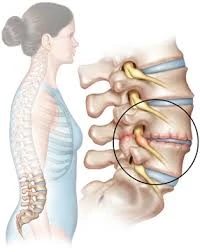
Injections are used both to diagnose and to treat. Placing a small dose of medication precisely at the inflamed nerve root or joint can settle inflammation and relieve pain – and where it does, it also confirms exactly which structure is causing the problem.
For many patients an injection gives enough relief to get through physiotherapy successfully and avoid surgery altogether. It is a day-care procedure.
2. Endoscopic discectomy
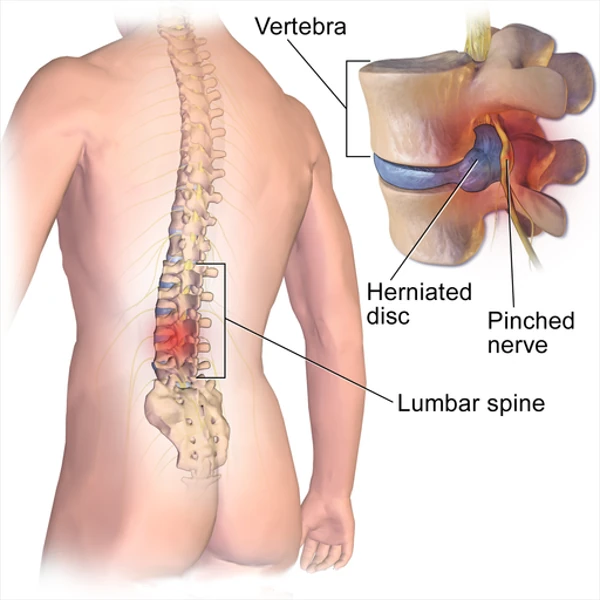
The least invasive way to remove a prolapsed disc pressing on a nerve. The surgeon works through a very small incision using an endoscope, removing the fragment of disc causing the compression while leaving the surrounding muscle and bone largely undisturbed.
Because the tissue disruption is minimal, patients typically mobilise quickly and go home sooner than after open surgery.
3. Micro discectomy
Disc removal through a small incision using an operating microscope for magnification and illumination. It is a well-established, reliable operation for a prolapsed disc causing sciatica, and remains the benchmark against which newer techniques are measured.
4. Open spine surgery and spinal fusion
Where the spine is unstable, badly degenerated, deformed or has been fractured, a larger operation may be needed. Spinal fusion joins two or more vertebrae into a single solid unit, removing the painful movement between them.
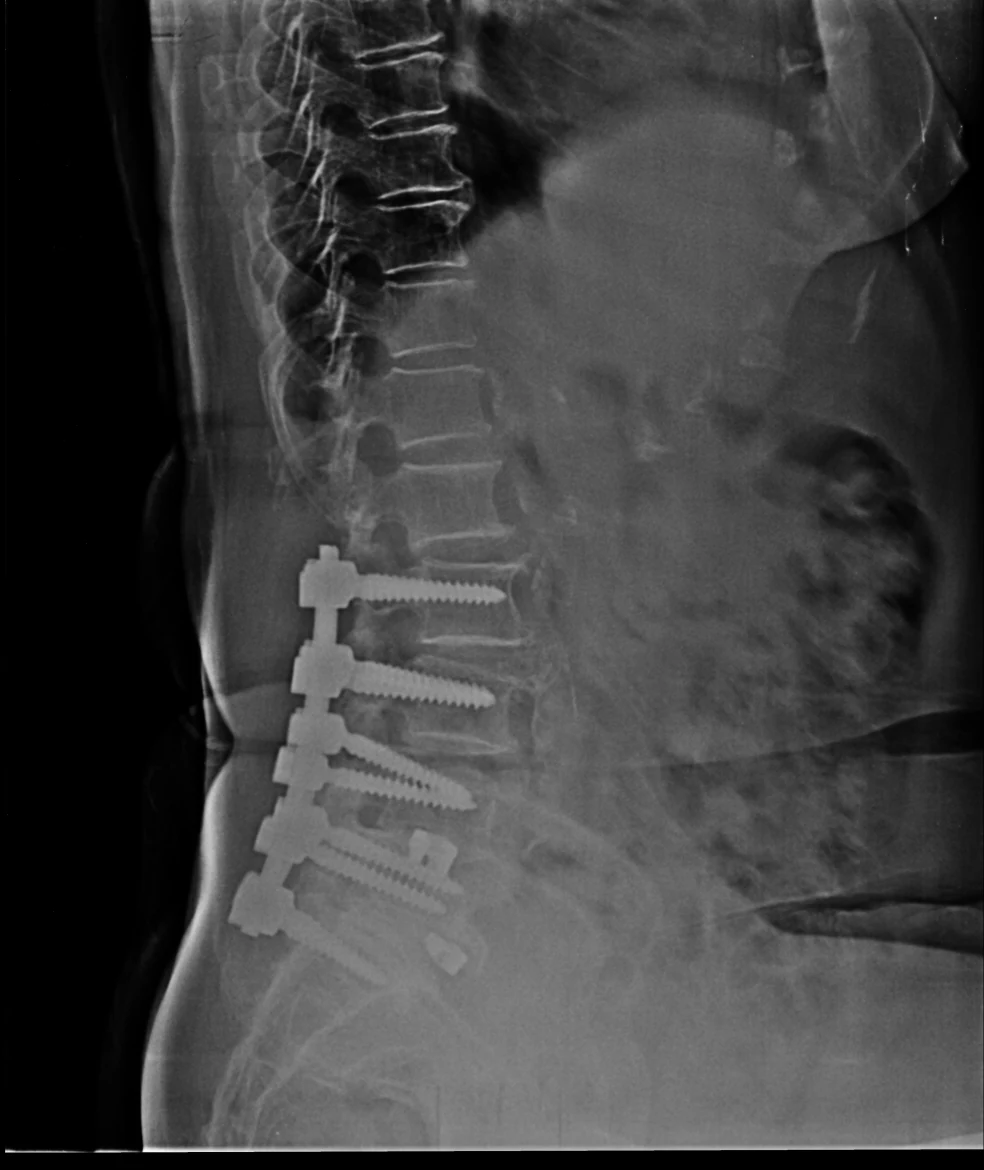
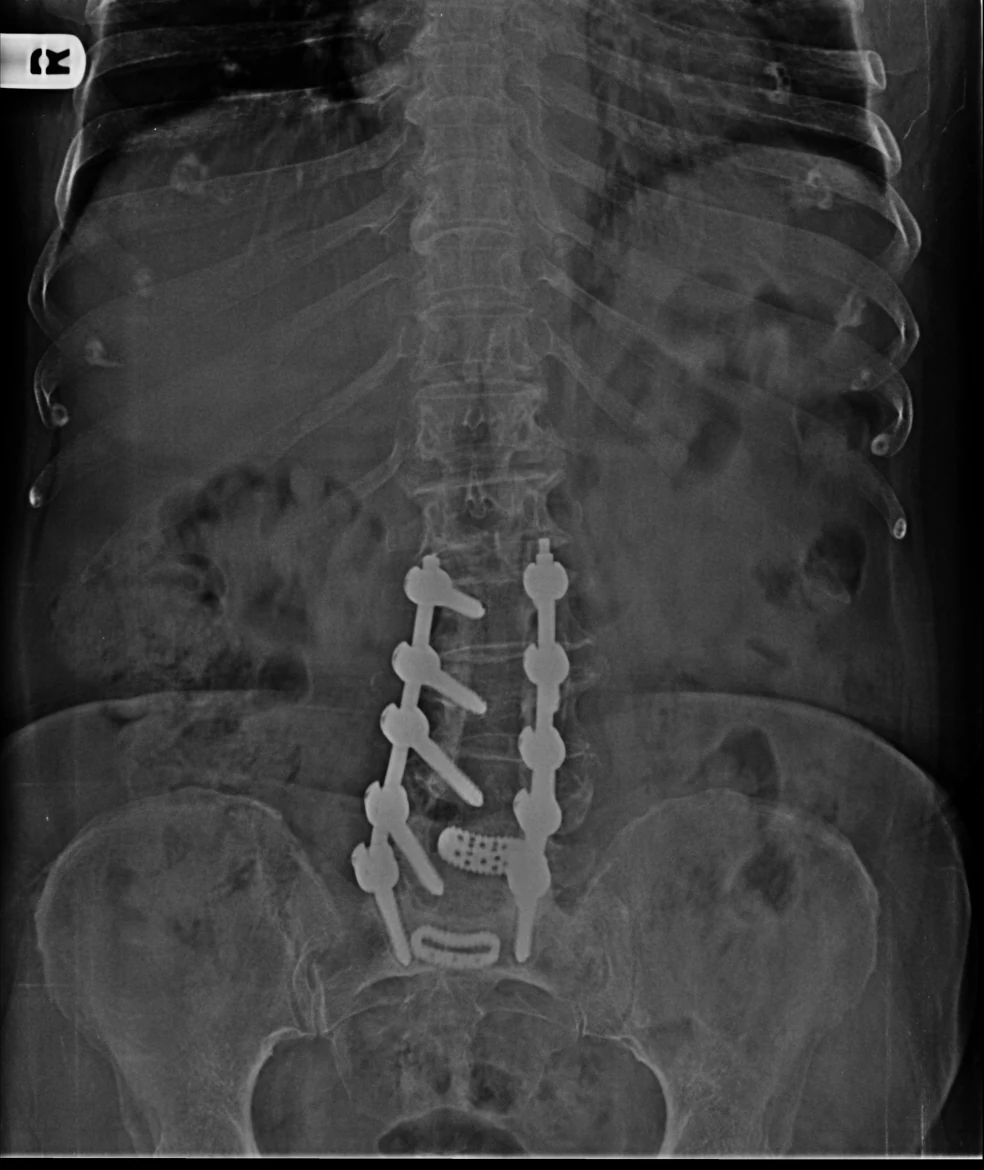
Posterolateral fusion places a bone graft between the bony processes at the back of the spine, secured with screws through each vertebra connected to a rod on either side.
Interbody fusion removes the disc entirely and places the graft in the space it occupied, often with a plastic or titanium spacer to restore the correct height and alignment. The vertebrae then fuse across that space. It can be approached from the front (ALIF), from the back (PLIF), from the back and slightly to one side (TLIF), or from the side (XLIF/DLIF). Where both approaches are combined it is described as a 360-degree fusion.
Which approach suits you depends on which level is affected, what is causing the problem, and your own anatomy. It is a decision made in clinic, with the imaging in front of us.
Conditions we treat
- Prolapsed or herniated disc Also called a slip disc
- Sciatica
- Lumbar canal stenosis Narrowing of the spinal canal
- Cervical disc problems In the neck
- Spondylolisthesis One vertebra slipping forward on another
- Spinal fractures Following trauma
- Degenerative disc disease
What we will tell you honestly
Not every back needs an operation. A significant number of patients who come to us for a spine consultation leave with a physiotherapy plan and a review date rather than a surgical date – and that is the right outcome.
When we do recommend surgery, we will explain what it will and will not fix. Surgery for a trapped nerve is usually very good at relieving leg pain; it is often less effective for long-standing back pain alone. Knowing that in advance is the difference between a satisfied patient and a disappointed one.
Questions patients ask
Frequently asked questions
Answers to what patients ask most about back pain and spine surgery, from whether an operation is needed at all to how long recovery takes.
Will I definitely need surgery for a slip disc?
No. Most prolapsed discs settle with time, physiotherapy and sometimes an injection. Surgery is for discs that are pressing on a nerve and causing pain or weakness that is not improving, or that is getting worse.
What is the difference between endoscopic and micro discectomy?
Both remove the disc fragment pressing on the nerve. Endoscopic surgery uses a smaller incision and disturbs less muscle, so recovery is often quicker. Micro discectomy uses an operating microscope and gives the surgeon a wider working view, which suits some disc positions better. The right choice depends on where your disc has prolapsed.
Is spine surgery risky?
All surgery carries risk, and spine surgery carries the added concern of operating close to nerves. Modern technique, magnification and intra-operative imaging have made it far safer than its reputation suggests. We will go through the specific risks of your operation before you consent.
How long is recovery?
After a discectomy most patients are up and walking the same or next day, and back to light work within two to four weeks. A fusion takes longer, because bone has to knit – expect a staged return over a few months. Your own timeline is set before surgery, not guessed afterwards.
Can I avoid surgery with physiotherapy?
Often, yes – and where that is realistic we will say so plainly rather than book you for an operation. Physiotherapy works best for pain coming from muscle, posture and stiffness. It is less able to help a nerve that is being physically compressed.
Bring your scans
If you have had an MRI or X-ray, bring the films and the report. A spine consultation without imaging is usually only half a consultation.